
How Storefront Glass Can Be Made More Impact Resistant
Learn how storefront glass can be made more impact resistant using laminated glass, tempered glass, security films, reinforced framing, and proper installation techniques for commercial buildings.
GLASS
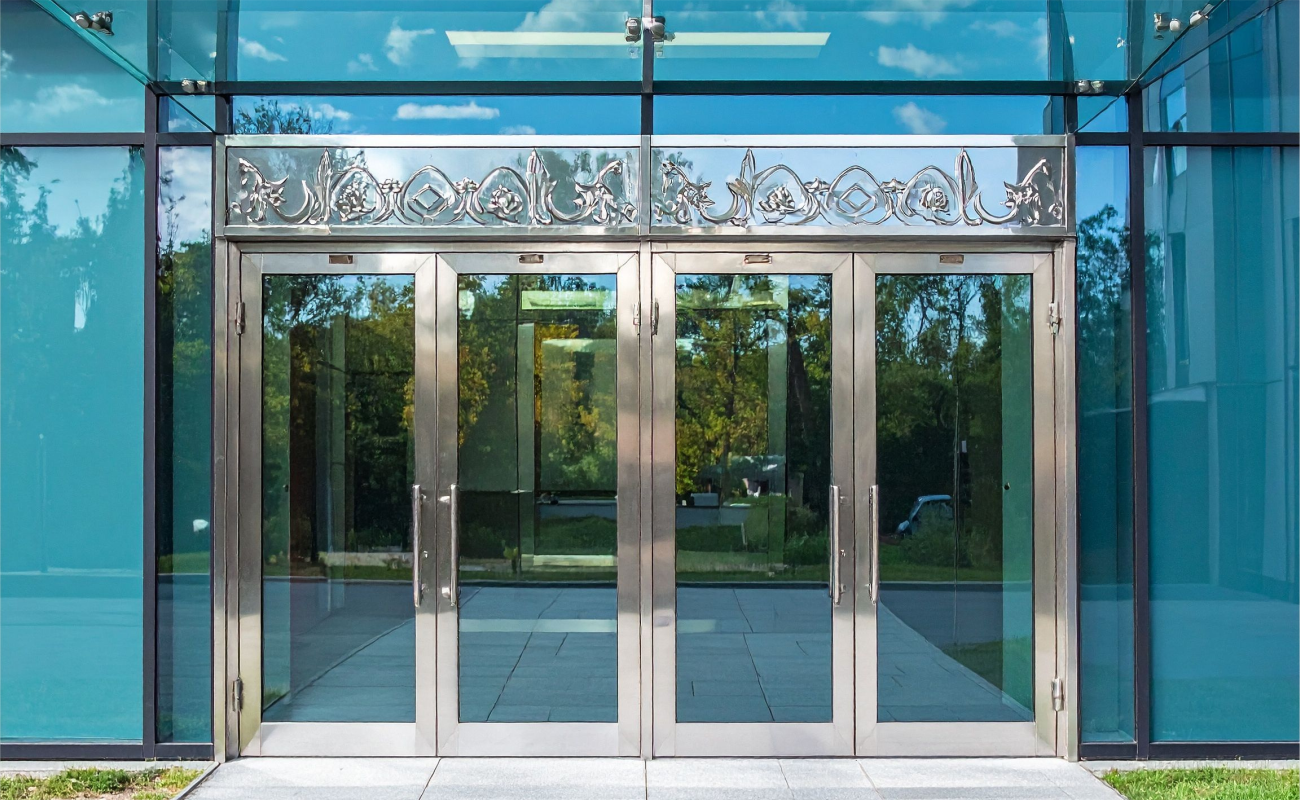
Storefront glass is one of the most vulnerable parts of any commercial building. It faces constant exposure to foot traffic, weather conditions, accidental impact, and in some cases, intentional force. For business owners, improving impact resistance is not just about protection, it’s about reducing downtime, preventing costly repairs, and maintaining a secure, professional appearance.
Modern commercial glazing systems offer multiple ways to significantly strengthen storefront glass without sacrificing visibility or design. Below is a detailed breakdown of how storefront glass can be made more impact resistant.
1. Laminated Glass for Maximum Security
Laminated glass is one of the most effective solutions for impact resistance in storefront systems. It is constructed by bonding two or more layers of glass with a durable interlayer, typically made of polyvinyl butyral (PVB) or similar materials.
Why it improves impact resistance:
Glass layers remain bonded even after cracking
The interlayer absorbs and disperses impact energy
Harder to penetrate compared to standard glass
Reduces risk of complete shattering
Best use cases:
Retail storefronts in busy urban areas
Businesses concerned about break-ins or vandalism
Properties near high-traffic sidewalks or roads
Even when damaged, laminated glass typically stays in place, maintaining a protective barrier until replacement can occur.
2. Tempered Glass for Strength and Safety
Tempered glass is heat-treated to increase its strength compared to standard annealed glass. It is commonly used in commercial storefronts due to its durability and safety performance.
Key advantages:
Up to 4–5 times stronger than regular glass
Resistant to thermal stress and minor impacts
Breaks into small, blunt fragments instead of sharp shards
Limitations:
Once broken, it shatters completely and must be replaced
Does not provide penetration resistance like laminated systems
Tempered glass is often used in combination with other systems to balance cost and performance.
3. Impact-Resistant Laminated Glass (Upgraded Systems)
For higher-risk environments, manufacturers produce specialized impact-rated laminated glass designed to meet stricter performance standards.
Features:
Thicker interlayers for enhanced durability
Engineered to withstand forced entry attempts
Tested against windborne debris and blunt force impact
Often used in hurricane-prone or coastal regions
Ideal for Virginia businesses in coastal areas like Hampton Roads, where storms and high winds are a concern, impact-rated laminated glass provides an added layer of protection against extreme weather conditions.
4. Protective Security Films
Security window films are an additional layer applied directly to existing glass. While not a replacement for structural glass systems, they significantly improve impact resistance.
How they work:
Transparent polyester film bonded to glass surface
Holds shattered glass together after impact
Delays forced entry attempts
Reduces glass fragmentation hazards
Benefits:
Cost-effective upgrade for existing storefronts
Quick installation with minimal disruption
Enhances safety without changing appearance
Security films are often used as a retrofit solution when full glass replacement is not immediately necessary.
5. Reinforced Framing Systems
Impact resistance is not determined by glass alone, the framing system plays a critical role in overall performance.
Strengthening methods include:
Heavy-duty aluminum storefront framing
Reinforced anchoring systems
Structural silicone glazing (SSG)
Impact-rated mullions and supports
Even high-performance glass can fail if installed in weak framing. A properly engineered frame ensures the glass system performs as intended under stress.
6. Proper Installation Techniques
Even the strongest glass will underperform if installation is not done correctly. Professional installation is essential for maximizing impact resistance.
Critical installation factors:
Precise alignment to avoid stress points
Correct use of glazing gaskets and sealants
Proper load distribution within the frame
Compliance with commercial building codes
Poor installation can lead to premature failure, reduced energy efficiency, and compromised safety.
7. Regular Maintenance and Inspection
Impact resistance is also maintained over time through proper upkeep.
Maintenance includes:
Checking seals for deterioration
Inspecting frames for structural movement
Cleaning without abrasive materials
Identifying early signs of stress cracks
Routine inspections help ensure storefront systems remain secure and functional long-term.
Final Thoughts
Improving storefront glass impact resistance is about combining the right materials, engineering, and installation practices. Laminated glass, tempered systems, security films, and reinforced framing all play a role in creating a stronger, more resilient storefront.
For business owners, investing in impact-resistant storefront glass is not just a protective measure, it’s a long-term strategy for safety, durability, and business continuity. Get professional storefront systems installation today.
Ready to Get Started?
Get a free estimate from a trusted Hampton Roads commercial glass & door company.
COMPANY
About Us
Industries
Service Areas
Reviews
Blog
Contact
809 Live Oak Dr, Suite 1
Chesapeake, VA 23320




M-F 8AM-4:30PM
service@apexdoorandglass.com
(757) 713-8894 or (757) 713-2643
© 2026 Apex Door and Glass. All rights reserved.
Website Design by BragencyX
Hampton Roads, Virginia & Elizabeth City, North Carolina's premier commercial door, glass, and window company.
GET IN TOUCH