
How Thick Should Commercial Glass Be?
How thick should commercial glass be? Learn about common 1/4", 5/16", and 3/8" glass thicknesses and how application, safety, size, and glass type affect selection.
GLASS
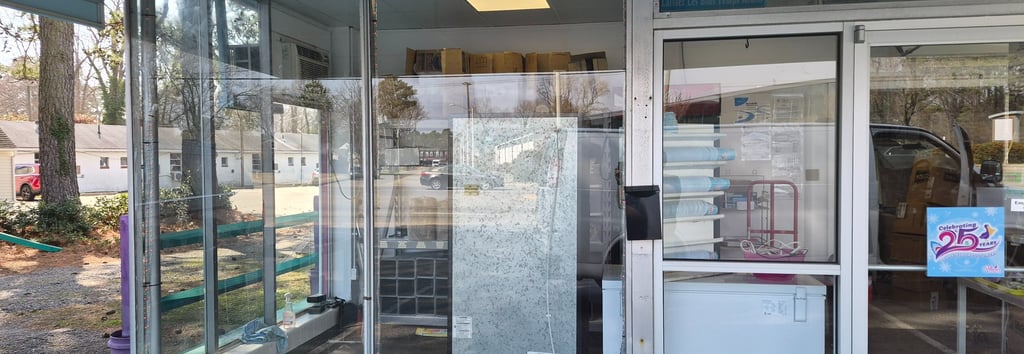

Commercial glass is not one-size-fits-all. The right glass thickness depends on where the glass is being installed, how large the panel is, whether it is part of a door or storefront system, and what level of safety, durability, and performance the application requires.
For many commercial glass installations, thicknesses such as 1/4 inch, 5/16 inch, and 3/8 inch are common, while thicker glass may be appropriate for certain larger, heavier, or specialized applications. The correct specification should be determined based on the complete glazing system rather than choosing a thickness based solely on appearance.
What Is the Standard Thickness for Commercial Glass?
1/4-inch glass is one of the most common thicknesses used in commercial glazing, particularly for storefront applications and other standard commercial glass installations.
However, commercial glazing can use several different thicknesses depending on the project:
Glass ThicknessCommon Applications1/4 inchStorefront glass, interior commercial glazing, standard applications5/16 inchCertain doors, larger panels, and applications requiring additional strength3/8 inchCommercial doors, heavier-duty glazing, larger panels1/2 inch or thickerSpecialty, structural, oversized, or high-performance applications
These are general examples rather than universal specifications. The glass thickness should be selected according to the specific opening, framing system, glass type, and project requirements.
Does Thicker Glass Mean Stronger Glass?
Not necessarily.
Glass thickness is only one factor in determining performance. Tempered glass, laminated glass, insulated glass, and other glass configurations can provide different performance characteristics even when their thicknesses are similar.
For example, tempered glass is heat-treated to increase its strength compared with ordinary annealed glass and is designed to break into smaller pieces when it fails. Laminated glass consists of multiple glass layers bonded with an interlayer, allowing the glass to remain together when broken.
This means choosing commercial glass isn't simply a matter of saying, "Use the thickest glass available."
The glass type and construction are just as important as thickness.
How Thick Should Commercial Storefront Glass Be?
For many standard commercial storefront systems, 1/4-inch glass is commonly used. Storefront glass may be used in fixed windows, entrances, office buildings, retail spaces, apartment buildings, and other commercial properties.
However, the appropriate thickness can change based on factors such as:
Size of the glass panel
Height and width of the opening
Wind exposure
Glass type
Framing system
Location of the glass
Whether the glass is part of a door
Required safety glazing
Applicable building codes
Performance requirements of the project
A larger storefront opening, for example, may require a different glass specification than a smaller interior pane.
How Thick Should Commercial Door Glass Be?
Commercial doors can require different glass specifications than fixed storefront panels because the glass is exposed to frequent movement, impacts, and everyday use.
3/8-inch glass is commonly used in certain commercial door applications, although the correct thickness depends on the specific door system and glass configuration.
Commercial entrance doors may also require tempered or laminated safety glass, depending on the location and applicable requirements.
When replacing glass in a commercial door, it is important to match the replacement glass to the existing door and hardware system rather than simply ordering a piece based on its dimensions.
Tempered vs. Annealed Glass: Does Thickness Matter?
Yes, but the type of glass matters just as much.
Annealed Glass
Annealed glass is ordinary glass that has been slowly cooled during manufacturing. It is commonly used where safety-glazing requirements do not apply.
When annealed glass breaks, it can form larger, sharp shards.
Tempered Glass
Tempered glass undergoes a heat-treatment process that increases its strength and changes the way it breaks.
When tempered glass fails, it generally breaks into smaller granular pieces rather than large sharp shards.
Tempered glass is commonly used in areas where safety glazing is required, including many doors and locations where people could come into contact with the glass.
Laminated Glass
Laminated glass consists of two or more layers of glass with an interlayer between them. When the glass breaks, the interlayer helps hold the pieces together.
Laminated glass can be useful when security, impact resistance, sound control, or other performance characteristics are important.
The correct choice depends on the application—not simply the thickness of the glass.
What Determines the Right Commercial Glass Thickness?
Several factors should be considered before selecting commercial glass.
1. Panel Size
The larger the glass panel, the more important proper glass specification becomes. Large panels may require a different thickness or configuration to meet performance requirements.
2. Location
A piece of glass installed inside an office may have completely different requirements from glass installed in an exterior storefront exposed to wind and weather.
3. Wind Loads
Exterior commercial glazing must be capable of handling the expected wind pressure for the building's location and exposure.
This is particularly important for buildings in coastal areas and other locations where wind conditions can be significant.
4. Safety Requirements
Certain locations require safety glazing. The appropriate glass type may be determined by the location of the glazing, its proximity to doors or walking surfaces, and applicable building codes.
5. Door or Fixed Panel
Glass installed in a commercial door experiences different conditions from stationary storefront glass. Door glass must work with the door frame, hinges, hardware, and operating system.
6. Framing System
The glass does not work independently. It is part of a larger system that includes the frame, seals, setting blocks, hardware, and other components.
A glass panel that is appropriate for one storefront system may not be appropriate for another.
Can You Replace Commercial Glass With Thicker Glass?
Not always.
It may seem logical that replacing a 1/4-inch pane with 3/8-inch glass would automatically make the installation stronger. However, thicker glass may not fit properly within the existing frame or glazing system.
The additional thickness can affect:
Frame compatibility
Glazing channels
Stops and gaskets
Door operation
Hardware clearance
Overall system performance
That's why commercial glass replacement should be treated as a system-matching process rather than simply a glass-sizing exercise.
How Do You Know What Thickness Your Commercial Glass Needs?
If you're replacing existing commercial glass, a professional can evaluate the opening and determine the appropriate replacement specification.
Measurements that may be relevant include:
Overall glass dimensions
Visible glass dimensions
Frame dimensions
Existing glass thickness
Glass type
Door or storefront configuration
Safety-glazing requirements
Exterior exposure
Existing hardware and glazing components
Do not assume that the thickness of a replacement pane should be determined solely by measuring the old glass. The replacement needs to be compatible with the existing system and meet applicable requirements.
Commercial Glass Installation in Hampton Roads
For businesses, property managers, apartment communities, retail spaces, offices, and commercial buildings, the right glass specification can make a significant difference in safety, durability, and long-term performance.
Apex Door and Glass provides commercial glass installation and repair, storefront glass services, commercial door installation, and related commercial glazing services throughout the Hampton Roads area and Elizabeth City, NC.
If you aren't sure whether your commercial glass should be 1/4 inch, 5/16 inch, 3/8 inch, or another specification, having the opening and existing system evaluated is the best way to determine the appropriate solution.
Frequently Asked Questions
Is 1/4-inch glass standard for commercial storefronts?
1/4-inch glass is commonly used in commercial storefront systems, but it isn't appropriate for every application. Panel size, glass type, wind loads, safety requirements, and the framing system all need to be considered.
Is 3/8-inch glass stronger than 1/4-inch glass?
Generally, increasing thickness can increase the glass's resistance to certain loads, but thickness alone doesn't determine overall performance. Tempering, lamination, panel size, framing, and installation also matter.
What thickness is commercial door glass?
Commercial door glass can commonly be 3/8 inch, but the required specification varies by door system and application. Safety glazing requirements and compatibility with the existing door should also be considered.
Should commercial glass be tempered?
Many commercial applications require or benefit from tempered safety glass, particularly where people could come into contact with the glazing. Whether tempered glass is required depends on the specific location and applicable building codes.
Can I measure my existing glass and order the same thickness?
You can use the existing glass as a reference, but simply matching its thickness does not guarantee that the replacement is appropriate. A professional should consider the complete glazing system and applicable requirements.
What is the best thickness for commercial storefront glass?
There isn't one universal best thickness. 1/4 inch is common for many standard storefront applications, while larger or specialized installations may require thicker glass or a different glass configuration.
How long does commercial glass last?
The lifespan varies considerably depending on the glass, framing system, installation quality, exposure, and maintenance. Properly installed commercial glazing can provide many years of service, but damaged, failed, or deteriorated glass should be evaluated and replaced when necessary.
Ready to Get Started?
Get a free estimate from a trusted Hampton Roads commercial glass & door company.

COMPANY
About Us
Industries
Service Areas
Reviews
Blog
Contact
809 Live Oak Dr, Suite 1
Chesapeake, VA 23320




M-F 8AM-4:30PM
service@apexdoorandglass.com
(757) 713-8894 or (757) 713-2643
© 2026 Apex Door and Glass. All rights reserved.
Website Design by BragencyX
Hampton Roads, Virginia & Elizabeth City, North Carolina's premier commercial door, glass, and window company.
GET IN TOUCH