
What Are the Different Types of Commercial Doors?
Learn about the different types of commercial doors, including storefront, glass, hollow metal, wood, steel, fire-rated, and automatic doors, and how to choose the right one.
GLASS
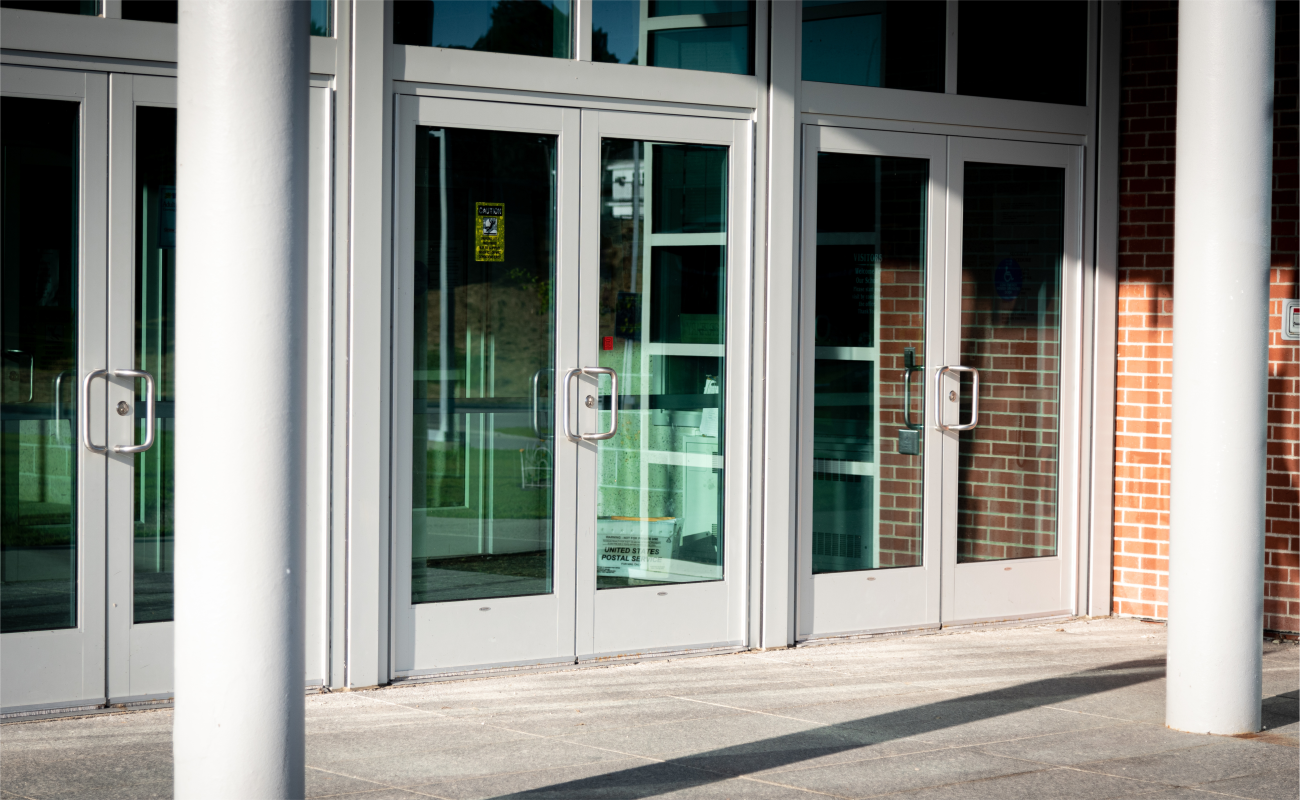
Commercial doors do much more than provide an entrance or exit. The right door can improve security, durability, accessibility, appearance, energy efficiency, and day-to-day functionality for a commercial property.
There are several types of commercial doors available, and each is designed for different environments and uses. A retail storefront may need an aluminum-and-glass entrance, while an apartment building, office, warehouse, or mechanical room may require a hollow metal or wood door.
Understanding the differences between commercial door types can help property owners, facility managers, and contractors choose the right door for each opening.
What Are the Most Common Types of Commercial Doors?
Some of the most common commercial door types include:
Aluminum storefront doors
Glass commercial doors
Hollow metal doors
Wood commercial doors
Steel doors and frames
Fire-rated doors
Automatic doors
Double commercial doors
Specialty and security doors
The best option depends on the location and purpose of the opening.
1. Aluminum Storefront Doors
Aluminum storefront doors are a common choice for retail stores, offices, shopping centers, restaurants, and other commercial buildings.
These doors typically combine an aluminum frame with glass, allowing natural light and visibility into the building. They can also complement storefront window systems for a consistent appearance across the exterior.
Benefits of aluminum storefront doors include:
Professional appearance
Excellent visibility
Lightweight construction
Corrosion resistance
Compatibility with commercial glass
Relatively simple maintenance
Wide range of configurations
Aluminum storefront doors are particularly useful when aesthetics and visibility are important, making them a popular choice for customer-facing businesses.
2. Commercial Glass Doors
Commercial glass doors are designed to provide visibility and a modern appearance while maintaining the functionality required for a commercial entrance.
They are commonly found in:
Retail stores
Office buildings
Apartment buildings
Shopping centers
Medical offices
Restaurants
Business lobbies
Commercial glass doors may use tempered or laminated safety glass depending on the application and applicable requirements.
Glass can also be incorporated into aluminum storefront door systems, providing businesses with a combination of durability, visibility, and a clean architectural appearance.
3. Hollow Metal Doors
Hollow metal doors are among the most durable and versatile options for commercial buildings.
They are commonly used in offices, apartment complexes, schools, warehouses, mechanical rooms, industrial facilities, and other high-traffic environments.
Despite their name, hollow metal doors are not necessarily "hollow" in the everyday sense. They typically consist of formed steel components with an internal construction designed for durability and performance.
Hollow metal doors are often selected because they offer:
High durability
Excellent impact resistance
Long service life
Security
Fire-rated options
Compatibility with commercial hardware
Low maintenance
They are especially useful in areas where a door needs to withstand frequent use or more demanding conditions.
4. Wood Commercial Doors
Wood doors can provide a warmer and more traditional appearance than metal doors.
They are frequently used in office buildings, hotels, apartment buildings, educational facilities, and interior commercial spaces.
Commercial wood doors are available in a variety of finishes and designs, making them useful when the appearance of the door is an important part of the building's interior.
Depending on the application, commercial wood doors can also be manufactured to meet specific performance and fire-rating requirements.
5. Steel Doors and Frames
Steel doors are frequently used where strength, security, and durability are priorities.
They can be paired with steel frames and commercial hardware to create a durable door assembly for demanding environments.
Steel door systems are common in:
Commercial buildings
Industrial facilities
Apartment complexes
Service areas
Mechanical rooms
Utility rooms
High-traffic areas
The specific construction and rating of a steel door should be selected according to the requirements of the opening.
6. Fire-Rated Commercial Doors
Fire-rated doors are designed to help limit the spread of fire and smoke through a building for a specified period of time when installed as part of a properly rated assembly.
They are commonly found in locations such as:
Stairwells
Corridors
Mechanical rooms
Utility areas
Commercial kitchens
Apartment buildings
Other openings where fire-rated assemblies are required
A fire-rated door is more than just a door slab. The entire assembly—including the frame, hardware, glazing where applicable, and other components—must be compatible with the required rating.
Fire-rated doors should never be modified or replaced with an incompatible component without considering the rating of the complete assembly.
7. Automatic Commercial Doors
Automatic doors allow people to enter and exit a building without manually opening the door.
They are particularly useful for high-traffic commercial entrances and buildings where accessibility and convenience are important.
Automatic door systems can be found in:
Retail stores
Medical facilities
Office buildings
Apartment buildings
Shopping centers
Public buildings
Automatic doors may use different operating systems depending on the door type, traffic volume, available space, and accessibility requirements.
8. Double Commercial Doors
Double doors use two door leaves within the same opening and are useful when a wider passage is needed.
They can be used for entrances, corridors, loading areas, offices, and other commercial applications.
Double commercial doors are available in several materials, including:
Aluminum and glass
Hollow metal
Steel
Wood
The correct configuration depends on the size of the opening, traffic requirements, hardware, and intended use.
9. Storefront Door Systems
Storefront doors are frequently installed as part of a larger storefront system rather than functioning as an isolated door.
A storefront system may include:
Aluminum framing
Glass doors
Fixed storefront glass
Door hardware
Door closers
Locks
Thresholds
Glazing components
This allows the entrance and surrounding storefront windows to work together as a complete system.
When a storefront door begins sticking, sagging, leaking, or failing to close properly, the problem may involve the door, frame, hardware, or surrounding glazing rather than the door alone.
How Do You Choose the Right Commercial Door?
Choosing a commercial door starts with understanding how and where the door will be used.
Consider the following factors:
Traffic: A busy retail entrance requires different performance characteristics than a low-traffic interior office.
Security: Exterior entrances and restricted areas may require stronger construction and specialized locking hardware.
Appearance: Customer-facing businesses may prioritize glass and aluminum storefront systems, while service areas may prioritize durability.
Fire rating: Certain openings may require a rated door assembly.
Accessibility: Entrances should be evaluated for applicable accessibility requirements and appropriate door operation.
Weather exposure: Exterior doors need to withstand the conditions they are exposed to, including wind and rain.
Hardware: Locks, closers, panic devices, hinges, thresholds, and other hardware need to be compatible with the door and intended use.
Existing frame: When replacing a commercial door, the existing frame and hardware should be evaluated to determine whether they can be reused or should also be replaced.
What Type of Commercial Door Is Best for a Storefront?
For many retail and customer-facing businesses, an aluminum storefront door with glass is an excellent option because it provides visibility while creating a professional entrance.
However, the best choice depends on the building and how the entrance is used.
For example, a high-traffic apartment building may have different requirements from a small professional office, while a warehouse entrance may prioritize security and durability over visibility.
What Type of Commercial Door Is Best for an Apartment Building?
Apartment buildings commonly use several different types of commercial doors throughout the property.
Exterior entrances may use aluminum and glass storefront systems, while interior and service areas may use hollow metal or other durable commercial doors.
Fire-rated doors may also be required in specific areas of an apartment building.
Because apartment properties experience substantial daily traffic, durability, security, hardware performance, and ease of maintenance are especially important considerations.
When Should a Commercial Door Be Repaired or Replaced?
Not every commercial door problem requires complete replacement.
A commercial door may simply need adjustment, hardware repair, replacement glass, a new closer, lock repair, or another component replaced.
However, replacement may make more sense when the door or frame has significant damage, repeated failures, excessive wear, corrosion, or compatibility issues.
Common signs that a commercial door needs professional attention include:
The door is difficult to open or close
The door won't latch properly
The door is sagging
The closer is failing
The glass is cracked or damaged
The frame is bent
The lock or hardware isn't functioning correctly
The door has significant corrosion
The door no longer provides the required security or performance
Addressing these problems early can help prevent a relatively small repair from becoming a larger door or storefront replacement project.
Commercial Door Installation and Repair in Hampton Roads
The right commercial door depends on the building, opening, traffic, security requirements, appearance, and intended use. There is no single commercial door that works for every property.
Apex Door and Glass provides commercial door and glass services for businesses and commercial properties throughout Hampton Roads and Elizabeth City, NC.
Apex Door and Glass works with commercial property owners, property managers, apartment communities, businesses, and other facilities that need commercial door installation, door replacement, storefront systems, commercial glass, and door hardware services.
Whether you need a new storefront entrance, hollow metal door, commercial glass door, replacement door, or repairs to an existing system, evaluating the complete opening is the best way to determine the right solution.
Frequently Asked Questions About Commercial Doors
What is the most common type of commercial door?
Aluminum storefront doors with glass are extremely common in retail and customer-facing commercial buildings. Hollow metal doors are also widely used throughout commercial and industrial properties because of their durability and security.
What is the difference between a commercial door and a residential door?
Commercial doors are generally designed for higher traffic and more demanding use than typical residential doors. Commercial systems may also use specialized frames, hardware, closers, panic devices, fire ratings, and other components that aren't typical of residential doors.
Are hollow metal doors better than wood doors?
Neither is universally better. Hollow metal doors are often preferred for durability, security, and demanding environments, while wood doors may be selected when appearance and interior design are higher priorities.
What are storefront doors made of?
Many storefront doors use aluminum framing with glass panels. The specific glass and framing configuration can vary depending on the building and application.
Can a commercial door be replaced without replacing the frame?
Sometimes. If the existing frame is in good condition and compatible with the replacement door, it may be possible to replace the door while retaining the frame. The opening, frame, hardware, and replacement door should be evaluated together.
How long do commercial doors last?
There is no universal lifespan. Commercial door longevity depends on the material, traffic volume, environmental exposure, installation quality, maintenance, and hardware. High-traffic doors may require repairs or component replacement well before the door itself needs to be replaced.
Who should install a commercial door?
Commercial doors should be installed by an experienced commercial door professional familiar with the specific door, frame, hardware, glazing, and applicable requirements. Proper installation is important for reliable operation and long-term performance.
Ready to Get Started?
Get a free estimate from a trusted Hampton Roads commercial glass & door company.

COMPANY
About Us
Industries
Service Areas
Reviews
Blog
Contact
809 Live Oak Dr, Suite 1
Chesapeake, VA 23320




M-F 8AM-4:30PM
service@apexdoorandglass.com
(757) 713-8894 or (757) 713-2643
© 2026 Apex Door and Glass. All rights reserved.
Website Design by BragencyX
Hampton Roads, Virginia & Elizabeth City, North Carolina's premier commercial door, glass, and window company.
GET IN TOUCH