
What Is Commercial Grade Glass?
Learn what commercial grade glass is, the types available, building code considerations, and how to choose the right glass for your commercial property.
GLASS
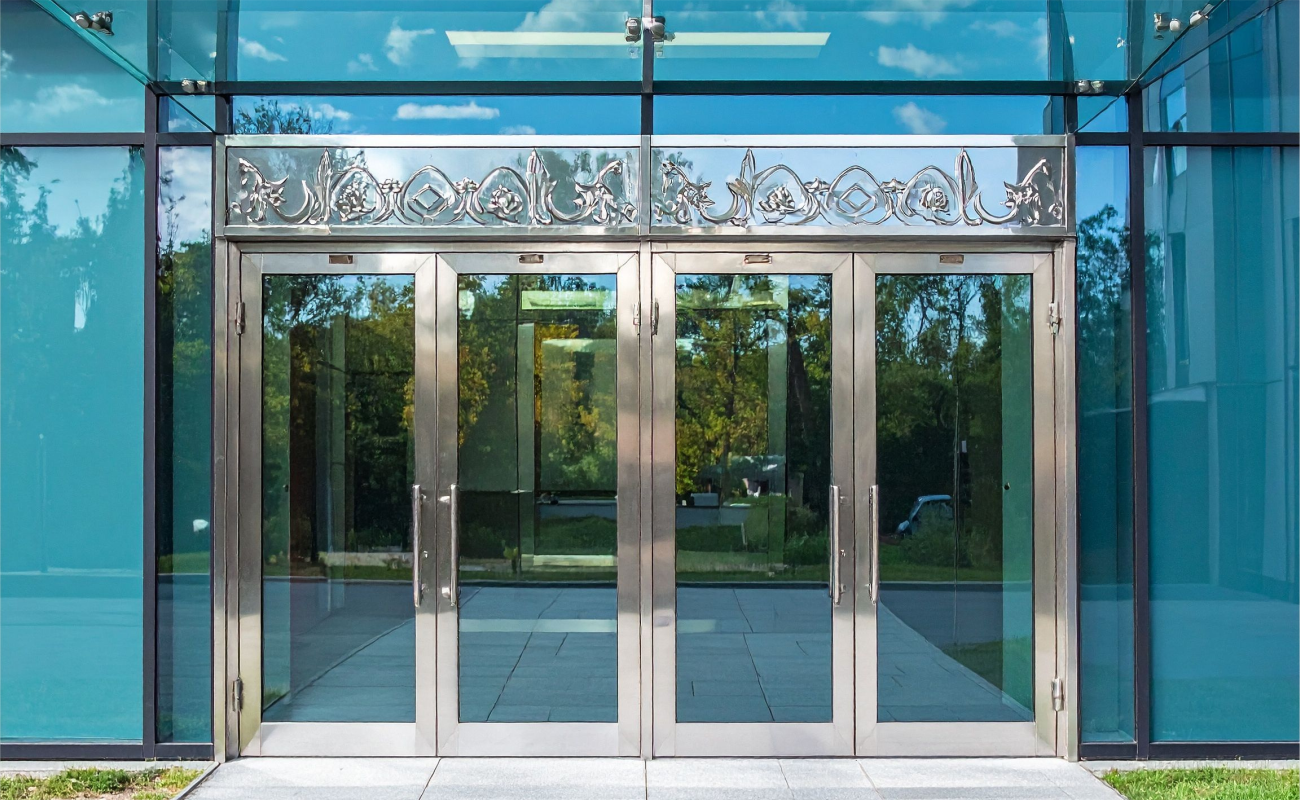
Commercial grade glass refers to glass products designed and manufactured for use in commercial buildings, where requirements for safety, durability, performance, and building-code compliance can be more demanding than typical residential applications.
Commercial glass is used in a wide range of properties, including offices, retail stores, restaurants, medical facilities, apartment buildings, schools, and other commercial spaces. Depending on the application, commercial glass may be used for storefronts, entrance doors, interior partitions, windows, and other architectural applications.
Importantly, “commercial grade glass” does not refer to one specific type of glass. Instead, it is a broad term that can include several different glass products selected according to the property's specific needs.
What Makes Glass Commercial Grade?
Commercial glass is typically selected based on factors such as safety, strength, size, energy performance, security, and the requirements of the building and application.
For example, a glass panel installed in a commercial storefront may have different requirements than glass installed in an interior office partition or commercial entrance.
The glass itself is only one part of a commercial glazing system. A properly designed installation may also include aluminum framing, doors, hardware, sealants, and other components that work together to create a functional system.
Types of Commercial Glass
Different types of glass can be used in commercial construction depending on the application.
Tempered Glass
Tempered glass is heat-treated to increase its strength compared with standard annealed glass. One of its important safety characteristics is that, when it breaks, it is designed to fracture into smaller pieces rather than large, sharp shards.
Tempered glass is commonly used in commercial doors, storefronts, and other locations where safety glazing may be required.
Laminated Glass
Laminated glass consists of two or more layers of glass bonded together with an interlayer. If the glass breaks, the interlayer helps hold the broken pieces together.
Laminated glass can be selected when safety, security, sound control, or other performance characteristics are important considerations.
Insulated Glass
Insulated glass units (IGUs) contain two or more panes separated by a spacer and sealed around the perimeter. The space between the panes can help reduce heat transfer and improve the building's energy performance.
Insulated glass is commonly used in commercial windows and exterior glazing applications.
Low-E Glass
Low-emissivity (Low-E) glass has a specialized coating designed to help control the transfer of heat through the glass.
Depending on the specific product and climate, Low-E glass can help improve energy efficiency by reducing unwanted heat gain or heat loss. This can make it an important consideration for commercial buildings where energy performance is a priority.
Is Commercial Glass Stronger Than Residential Glass?
Not necessarily. Commercial glass is not simply a stronger version of residential glass.
The appropriate glass depends on how and where it will be used. A commercial project may require tempered or laminated glass because of safety considerations, while another application may prioritize insulation, solar control, security, or appearance.
Commercial glazing professionals consider the intended application and project requirements when determining which glass product is appropriate.
Does Commercial Glass Have to Meet Building Codes?
Yes, commercial glass installations may be subject to applicable building codes, safety glazing requirements, accessibility requirements, and other regulations.
Certain locations—such as doors, entrances, and areas that could present a human-impact hazard—may require safety glazing.
The requirements can vary based on the building, location of the glass, size and configuration of the glazing, and applicable local and national codes.
This is one reason professional installation matters. Selecting glass based solely on appearance or price can result in a product that is inappropriate for the application.
Commercial Glass vs. Storefront Glass
The terms “commercial glass” and “storefront glass” are sometimes used interchangeably, but they do not mean exactly the same thing.
Commercial glass is a broad category that can include many types of glazing products used in commercial buildings.
Storefront glass typically refers to glazing installed as part of a commercial storefront system. A storefront system commonly consists of glass panels held within aluminum framing, often incorporating commercial entrance doors.
A storefront project therefore involves more than simply selecting a piece of glass. The glass, framing, doors, hardware, and installation need to work together as a complete system.
What Should You Consider When Choosing Commercial Glass?
The right commercial glass depends on the property's specific requirements. Important considerations can include:
Safety: Is the glass located in a door, entrance, or other high-traffic area?
Durability: How much use and exposure will the glass receive?
Energy efficiency: Does the building need improved thermal performance?
Security: Does the application require additional resistance to impact or intrusion?
Size and configuration: What dimensions and framing system are required?
Appearance: How should the glass look from both inside and outside the building?
Building requirements: What codes and specifications apply to the project?
Installation conditions: Can the existing framing be reused, or does the entire system need to be replaced?
A knowledgeable commercial glass professional can evaluate these factors and help determine an appropriate solution.
Why Professional Commercial Glass Installation Matters
Even high-quality glass can perform poorly if it is improperly measured or installed.
Commercial glass installation requires precision. Measurements need to be accurate, glass must be handled correctly, and the glazing system needs to be properly secured and sealed. On storefront projects, the framing and door system must also be installed correctly to achieve the intended performance.
Professional installation can also help identify potential issues with an existing storefront or opening before they become larger problems.
When Should a Business Consider Commercial Glass Replacement?
Businesses may need commercial glass replacement because of accidental damage, aging materials, failed insulated glass units, remodeling, changes to the storefront, or a desire to improve the building's appearance or performance.
Cracked or damaged glass should be evaluated promptly, particularly when it is located in a high-traffic area or serves as part of a commercial entrance.
For older storefronts, replacement may also provide an opportunity to evaluate the condition of the framing, doors, hardware, and other components rather than replacing glass alone.
The Bottom Line
Commercial grade glass is not a single type of glass. It is a broad category of glazing products used in commercial environments, with the specific glass selected based on safety, performance, durability, energy efficiency, security, appearance, and applicable building requirements.
The right solution depends on the building and the specific application. For that reason, commercial glass should be evaluated as part of a complete glazing system rather than treated as a one-size-fits-all product.
For businesses considering commercial glass installation, storefront installation, commercial door installation, or glass replacement, working with an experienced commercial glass contractor can help ensure the appropriate materials and installation methods are used for the project.
Apex Door and Glass provides commercial glass and door solutions for businesses, including commercial storefront and door installation. Contact Apex Door and Glass to discuss your project and determine the right commercial glass solution for your property.
Ready to Get Started?
Get a free estimate from a trusted Hampton Roads commercial glass & door company.

COMPANY
About Us
Industries
Service Areas
Reviews
Blog
Contact
809 Live Oak Dr, Suite 1
Chesapeake, VA 23320




M-F 8AM-4:30PM
service@apexdoorandglass.com
(757) 713-8894 or (757) 713-2643
© 2026 Apex Door and Glass. All rights reserved.
Website Design by BragencyX
Hampton Roads, Virginia & Elizabeth City, North Carolina's premier commercial door, glass, and window company.
GET IN TOUCH