
What Type of Doors Are Used in Commercial Buildings?
What type of doors are used in commercial buildings? Explore hollow metal, storefront, glass, wood, fire-rated, automatic, and other commercial door systems.
DOORS
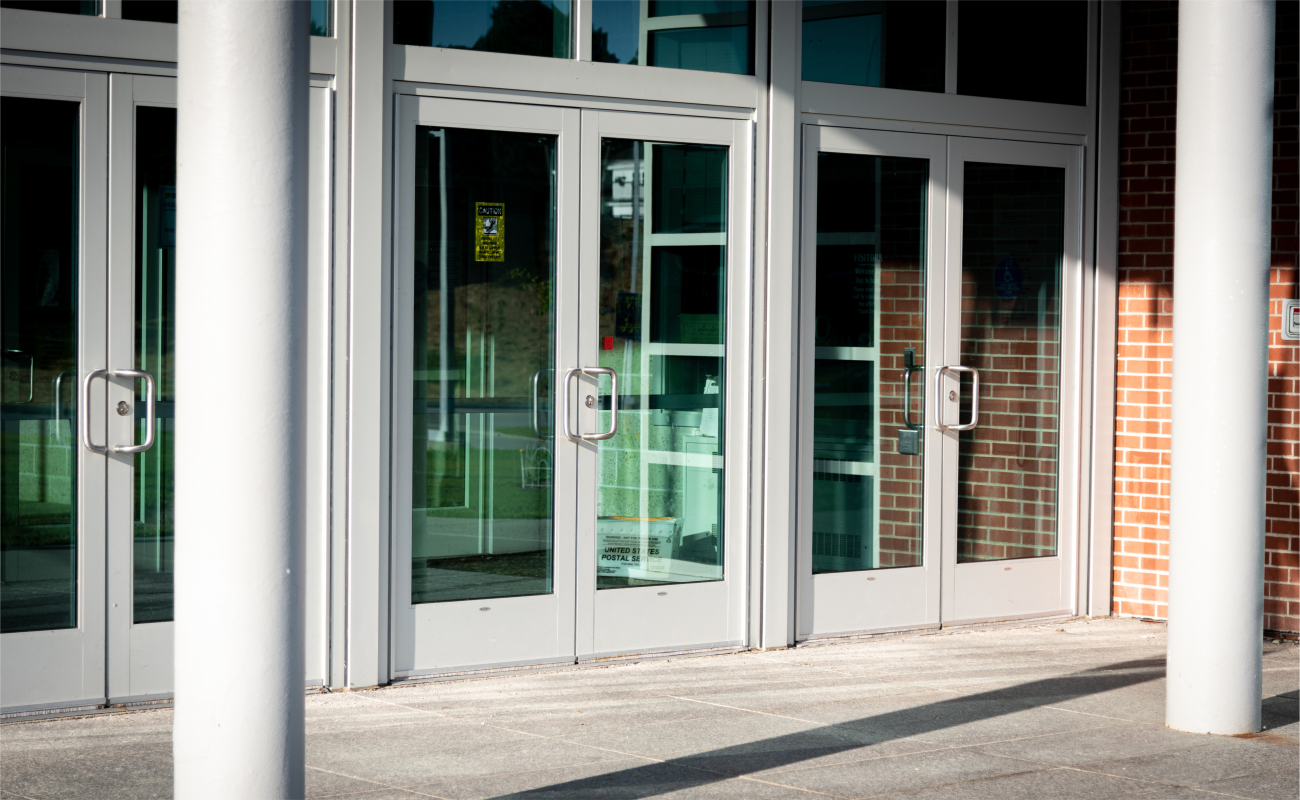
Commercial buildings use several different types of doors depending on the building's purpose, traffic, security requirements, and architectural design. An office building, apartment complex, retail store, warehouse, and medical facility may all require different door systems to support their daily operations.
Some of the most common types of commercial doors include hollow metal doors, aluminum storefront doors, glass doors, commercial wood doors, fire-rated doors, and automatic doors.
Choosing the right door involves more than appearance. Durability, hardware compatibility, accessibility, security, and applicable building codes all play an important role.
Below are the most common types of doors used in commercial buildings and where each one is typically installed.
1. Hollow Metal Doors
Hollow metal doors are among the most widely used door types in commercial and industrial buildings. They are typically constructed from steel and are designed to handle frequent use and demanding environments.
These doors are commonly found in:
Office buildings
Apartment complexes
Schools and universities
Warehouses
Hospitals and medical facilities
Stairwells and service entrances
Hollow metal doors are popular because they offer durability, security, and compatibility with commercial-grade hardware. They can be installed with reinforced frames, heavy-duty hinges, commercial locks, and door closers.
Certain hollow metal door configurations are also available as fire-rated assemblies, making them suitable for openings where fire protection is required.
For property managers and building owners, hollow metal doors are often a practical choice for high-traffic areas where long-term durability is important.
2. Aluminum and Glass Storefront Doors
Aluminum storefront doors are commonly used at the main entrances of retail stores, restaurants, office buildings, and other commercial properties.
These doors typically feature aluminum framing and large glass panels. Their design allows natural light into the building while providing visibility from the exterior.
Common applications include:
Retail storefront entrances
Office building entrances
Shopping centers
Restaurants
Commercial lobbies
Professional office spaces
Storefront doors are often paired with aluminum storefront framing, commercial glass, door closers, locks, and other specialized hardware.
Because these entrances experience frequent use and exposure to the elements, proper installation and maintenance are important. Issues such as misalignment, damaged glass, worn hardware, and malfunctioning closers can affect both security and daily operation.
3. Commercial Glass Doors
Commercial glass doors are frequently used in buildings where visibility and a modern appearance are important.
Unlike traditional solid doors, glass doors allow light to pass through and create a more open environment. They are commonly installed in offices, conference rooms, retail spaces, and storefront entrances.
Depending on the application, commercial glass doors may use:
Aluminum framing
Tempered safety glass
Laminated glass
Specialized glass door hardware
Commercial-grade hinges and closers
The appropriate glass type depends on the door design, panel dimensions, safety requirements, and applicable codes.
Glass doors can provide an attractive entrance, but they must be properly specified and installed to ensure safe operation.
4. Commercial Wood Doors
Commercial wood doors are commonly used for interior spaces in office buildings, hotels, schools, apartment buildings, and other commercial properties.
They are often selected for their appearance and ability to complement interior architectural designs.
Common applications include:
Private offices
Conference rooms
Interior corridors
Hotel rooms
Apartment units
Administrative areas
Commercial wood doors may feature solid-core construction, durable finishes, commercial-grade hardware, and fire-rated configurations where required.
For higher-traffic areas, selecting a door with appropriate construction and a durable finish can help reduce wear and maintenance.
5. Fire-Rated Commercial Doors
Fire-rated doors are used in commercial buildings to help slow the spread of fire and smoke between designated areas.
They are commonly found in:
Stairwells
Mechanical rooms
Electrical rooms
Utility areas
Certain corridors
Other openings requiring fire protection
Fire-rated doors are available in different materials, including hollow metal and wood. Their ratings indicate the duration for which the listed assembly has been tested to provide fire protection under specified conditions.
An important distinction is that a fire rating applies to a complete, compatible assembly. The door, frame, glazing, hardware, and installation must meet the applicable listing and requirements.
Fire-rated doors may also require self-closing and positive-latching hardware. They should never be modified or fitted with incompatible components without verifying that the assembly remains compliant.
6. Automatic Commercial Doors
Automatic doors are designed to open and close without requiring someone to manually operate the door.
They are commonly used in buildings where accessibility, convenience, and high pedestrian traffic are important.
Typical applications include:
Hospitals
Grocery stores
Airports
Shopping centers
Office buildings
Hotels
Automatic commercial doors can include sliding, swinging, and revolving configurations.
They use sensors, activation switches, and specialized operators to control movement. These systems must be properly installed, adjusted, and maintained to operate safely.
Automatic doors can improve accessibility and traffic flow, but the appropriate system depends on the entrance design and building requirements.
7. Commercial Double Doors
Double commercial doors consist of two door leaves installed within one opening. They are commonly used when a wider entrance is needed for pedestrian traffic, equipment, deliveries, or large items.
You may find double doors in:
Apartment building entrances
Office buildings
Schools
Warehouses
Conference facilities
Commercial service entrances
Double doors can be constructed from hollow metal, aluminum and glass, or wood, depending on the application.
Their hardware may include door closers, flush bolts, coordinating devices, panic hardware, and specialized locking systems. The hardware configuration depends on how the opening is intended to operate and any applicable egress requirements.
8. Commercial Sliding Doors
Commercial sliding doors operate along a track rather than swinging into or out of a room.
They are commonly used in retail spaces, office interiors, healthcare facilities, and certain commercial entrances.
Some applications include:
Automatic sliding glass entrances
Interior office partitions
Retail display areas
Space-saving interior openings
Sliding doors can be useful where swing clearance is limited or where pedestrian traffic needs to move efficiently. However, the system must be selected based on the opening, accessibility, safety, and security requirements.
9. Commercial Security Doors
Security doors are designed to help protect commercial properties from unauthorized access, forced entry, and other security risks.
They are commonly used at:
Building service entrances
Warehouses
Storage areas
Restricted-access offices
Mechanical rooms
Apartment building entrances
Depending on the level of security needed, these systems may incorporate reinforced door construction, heavy-duty frames, commercial locks, access-control equipment, and specialized glazing.
Security requirements vary significantly between properties. A warehouse entrance may require a different solution than the main entrance to an apartment building.
How to Choose the Right Door for a Commercial Building
With so many commercial door options available, selecting the right system requires evaluating how and where the door will be used.
Here are several important factors to consider.
Building Type and Application
Start by identifying the purpose of the opening.
A retail storefront may benefit from an aluminum and glass entrance, while a warehouse may require a durable hollow metal door. An apartment building may need a secure main entrance with controlled access.
The door should be selected based on the function of the space rather than appearance alone.
Daily Traffic
Consider how frequently the door will be opened and closed.
High-traffic entrances generally require durable construction, reliable hardware, and components designed for repeated operation.
Security Requirements
Some commercial doors need basic locking hardware, while others require electronic access control, reinforced frames, or specialized locking systems.
Consider who needs access to the building and whether certain areas should remain restricted.
Fire and Accessibility Requirements
Certain commercial openings require fire-rated assemblies, specific hardware, or accessibility features.
For example, the ADA Standards generally require at least 32 inches of clear opening width for accessible doors when measured with the door open 90 degrees. The required door configuration and other clearances should be verified for the specific opening.
Fire-rated doors must also maintain their listed assembly requirements, including compatible frames and hardware.
Maintenance and Long-Term Costs
A commercial door is an investment in the operation and security of a property.
Consider the expected maintenance, availability of replacement hardware, durability of the materials, and cost of future repairs.
Choosing an appropriate door system from the beginning can help reduce recurring maintenance issues.
What Are the Most Common Commercial Doors for Apartment Buildings?
Apartment buildings often use several different types of commercial doors throughout the property.
The main entrance may feature an aluminum and glass storefront system with access control. Stairwell and service-area openings commonly use hollow metal doors. Interior amenity spaces may use commercial wood doors, while designated openings may require fire-rated assemblies.
Property managers should pay particular attention to:
Main entrance doors and storefront systems
Stairwell and corridor doors
Maintenance and utility room doors
Fire-rated openings
Door closers and locking hardware
Access-control systems
Because apartment entrances and common areas experience frequent daily use, regular inspections and maintenance can help prevent operational problems and security concerns.
Need Commercial Door Installation, Repair, or Replacement in Hampton Roads?
The right commercial door depends on the building, the opening, and how the space is used. Selecting the correct material and hardware is important, but proper installation and ongoing maintenance are equally essential.
Apex Door and Glass provides commercial door and glass services throughout Hampton Roads, Virginia, and Elizabeth City, North Carolina.
We work with businesses, property managers, apartment communities, and other commercial properties that need dependable door installation, repair, and replacement.
Whether you need a hollow metal door, storefront entrance, commercial glass door, or replacement hardware, our team can help evaluate your existing opening and determine an appropriate solution.
Contact Apex Door and Glass to discuss your commercial door project.
Frequently Asked Questions
What is the most common type of commercial door?
Hollow metal doors and aluminum storefront doors are among the most common types. Hollow metal doors are frequently used for interior corridors, service entrances, and utility areas, while aluminum and glass doors are popular for retail and office entrances.
What type of doors are used in office buildings?
Office buildings commonly use hollow metal doors for service areas and certain interior openings, commercial wood doors for private offices and conference rooms, and aluminum and glass storefront systems for main entrances. Fire-rated doors may also be required in designated locations.
What type of doors are used in warehouses?
Warehouses commonly use hollow metal personnel doors for employee access and service entrances. Depending on the facility, they may also use specialized industrial doors for loading areas, equipment access, and larger openings.
Are commercial doors different from residential doors?
Yes, often. Commercial doors are frequently specified for higher traffic, specialized hardware, increased durability, and building-specific safety requirements. However, the exact differences depend on the door type and intended application.
What is the best material for a commercial door?
There is no single best material for every commercial building. Steel is commonly selected for durability and security, aluminum and glass for storefront entrances, and wood for certain interior spaces. The best choice depends on the opening, environment, appearance, and performance requirements.
How often should commercial doors be maintained?
Maintenance frequency depends on the door type, traffic, environment, and manufacturer recommendations. High-traffic entrances and doors with closers, exit devices, or access-control systems should be inspected regularly to identify wear, alignment issues, and hardware problems before they become larger concerns.
Ready to Get Started?
Get a free estimate from a trusted Hampton Roads commercial glass & door company.

COMPANY
About Us
Industries
Service Areas
Reviews
Blog
Contact
809 Live Oak Dr, Suite 1
Chesapeake, VA 23320




M-F 8AM-4:30PM
service@apexdoorandglass.com
(757) 713-8894 or (757) 713-2643
© 2026 Apex Door and Glass. All rights reserved.
Website Design by BragencyX
Hampton Roads, Virginia & Elizabeth City, North Carolina's premier commercial door, glass, and window company.
GET IN TOUCH